
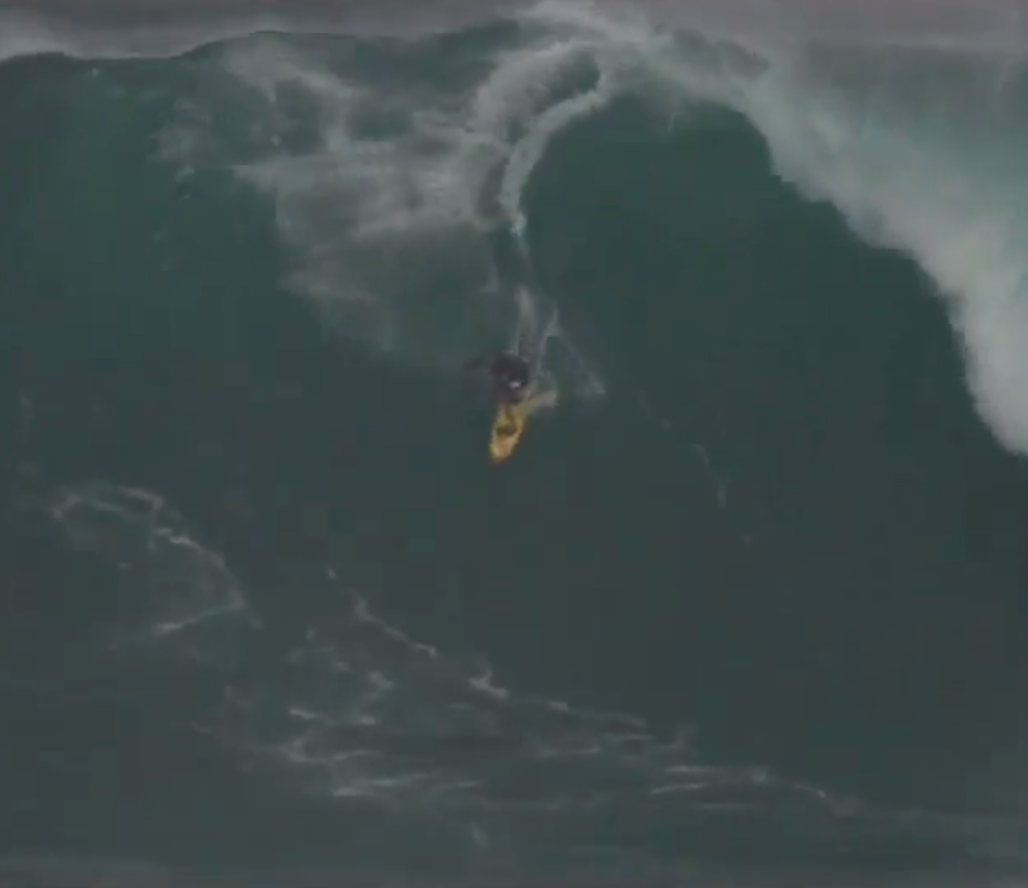
Riding the ultimate surf in movie “Point Break”
After a brief trip to the lake to mark my husband’s last day of vacation, we plopped down in our family room and began watching “Point Break”, a movie starring Patrick Swayze as the ringleader of a group of surfers that don masks of ex-American presidents to rob banks. While resisting the obvious urge to draw parallels between the movie’s plot and reality (presidents defrauding an unsuspecting American public) I can’t resist highlighting some notably philosophical lines in the movie. In a dialogue with an undercover FBI agent Swayze’s character criticizes fellow surfers for their ignorance of the “spiritual side of the sea.” He characterizes riding waves as a state of mind, where you both lose and find yourself in the same moment. To achieve this sublime state requires total commitment – “no backing down, a rare quality in this world” – as you paddle out into the unknown sea. Further, the surfer reveals that his whole life has been about experiencing a rare moment when the legendary Fifty Year Storm produces the biggest surf the planet has ever seen off the coast of Australia and the ocean “lets us know how small we really are.” This oneness or accordance with nature Swayze calls the ultimate rush and counsels “if you want the ultimate you have to be willing to pay the ultimate price,” concluding that “it’s not tragic to die doing what you love.”
Uncertain how the surfer achieved this awareness of Natural Law, it is reasonable to conclude his knowledge did not come from modern American public education or Hollywood. More likely, he learned these fixed and discoverable laws – what Jefferson termed the “Laws of Nature and of Nature’s God” in the Declaration of Independence – by observing his surroundings and recognizing self evident truths. He witnesses the hierarchal order of the universe – the natural ascension from man to the Divine – and acknowledges that living in accordance with the highest or ultimate things in nature is a very desirable thing – the most desirable state. This natural standard inspired the founding of America and gives rise to her constitutional form. Perhaps a more fitting question is how did the Founders learn about Natural Law? Was it by reading the “elementary books of public right” as Jefferson noted or were they surfers?

 The Liberty Belle Blog