Reflections on All Saints Day

Feeling overly emotional today . . . on this November 1st. Perhaps because it’s All Saints Day. Or maybe because neither Roger nor I remembered he was on-call today (third weekend in a row – for the bonus round!) until well after last night’s football game. Imagine how HE felt at learning around midnight that he’d have to work today, starting at 6 a.m.! We’d planned a family work day at home today, beginning with outside winterizing like trimming trees and weeding flower beds, in preparation of “pansy/viola-planting” (my favorite flower b/c they are “happy”). Surely, it can’t be because the most important part of that darn announcement got edited out or that I couldn’t find the timely words (before the mid-term election) yet again for another article about the sad state of affairs in our country!

This is our second year to host the Williams family Thanksgiving gathering and a fair amount of preparation is required (I can’t even think about the inside of the house, yikes!). I agree with Southern Living magazine that Fall IS the South’s best season – I offer today in central Texas as evidence. It’s clear and the air is crisp, ripe with the sights and sounds of autumn. We awoke to temps in the 40s with the high expected near 70 degrees. I’ve always felt more “connected” to the world around me this time of year – likely why I chose to get married in October and honeymoon on the East Coast when fall foliage is in all its glory. My how twenty years flies!

Screen Shot 2014-11-01 at 1.17.07 PMRoger recently texted me this picture of a poster he spotted at work. It’s a quote from Mother Teresa, probably the most-noted of the modern day saints. I love what is says – words to live by – a sort of “how-to” for sainthood or “right-living”; the standard of right being the natural standard or what the Founding Fathers termed “the Laws of Nature and of Nature’s God” in the Declaration of Independence. I love what the poster says but I love it more that Roger saw it, knew it would move me, and took the time to forward it.

It also reminds me of something I recently read in my favorite Lincoln book (so far). Lincoln was a “Clay man” – an admirer and follower of Henry Clay, author of the Missouri Comprise, which had as its purpose to phase out slavery by restricting its expansion into the new territories. Clay had known the Founding Fathers personally and he seemed to Lincoln the natural guardian of their great traditions. What Lincoln said of Clay applied also to himself: “He loved his country warmly, because it was his home; but he loved it even more because it was a free country.” Similar sentiments were echoed when Benjamin Franklin said: “Where liberty dwells, there is my country.” These early statesmen and model patriots sacrificed and served America because of the higher ideal she embodied and hopefully still does.

Reel Revealing: Were The Founders Surfers?

Riding the ultimate surf in Point Break movie

Riding the ultimate surf in movie “Point Break”

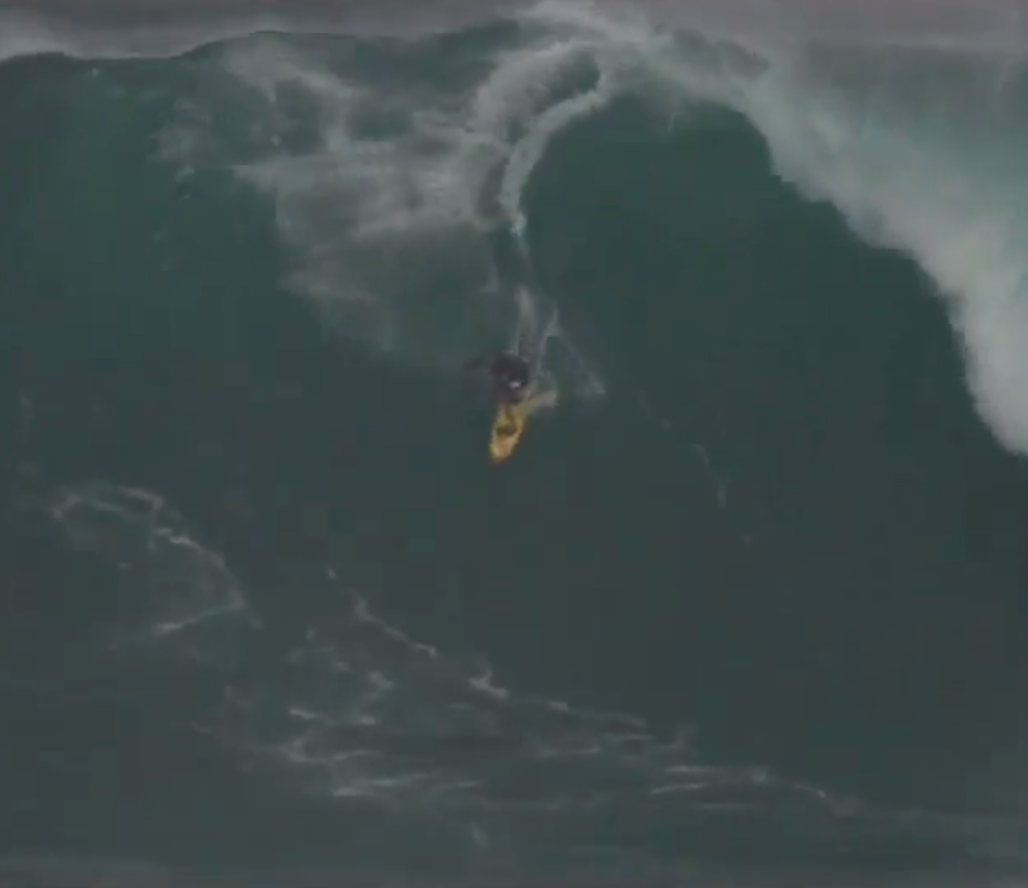
After a brief trip to the lake to mark my husband’s last day of vacation, we plopped down in our family room and began watching “Point Break”, a movie starring Patrick Swayze as the ringleader of a group of surfers that don masks of ex-American presidents to rob banks. While resisting the obvious urge to draw parallels between the movie’s plot and reality (presidents defrauding an unsuspecting American public) I can’t resist highlighting some notably philosophical lines in the movie. In a dialogue with an undercover FBI agent Swayze’s character criticizes fellow surfers for their ignorance of the “spiritual side of the sea.” He characterizes riding waves as a state of mind, where you both lose and find yourself in the same moment. To achieve this sublime state requires total commitment – “no backing down, a rare quality in this world” – as you paddle out into the unknown sea. Further, the surfer reveals that his whole life has been about experiencing a rare moment when the legendary Fifty Year Storm produces the biggest surf the planet has ever seen off the coast of Australia and the ocean “lets us know how small we really are.” This oneness or accordance with nature Swayze calls the ultimate rush and counsels “if you want the ultimate you have to be willing to pay the ultimate price,” concluding that “it’s not tragic to die doing what you love.”

Uncertain how the surfer achieved this awareness of Natural Law, it is reasonable to conclude his knowledge did not come from modern American public education or Hollywood. More likely, he learned these fixed and discoverable laws – what Jefferson termed the “Laws of Nature and of Nature’s God” in the Declaration of Independence – by observing his surroundings and recognizing self evident truths. He witnesses the hierarchal order of the universe – the natural ascension from man to the Divine – and acknowledges that living in accordance with the highest or ultimate things in nature is a very desirable thing – the most desirable state. This natural standard inspired the founding of America and gives rise to her constitutional form. Perhaps a more fitting question is how did the Founders learn about Natural Law? Was it by reading the “elementary books of public right” as Jefferson noted or were they surfers?

By Design: Why Natural Law Matters

Screen Shot 2013-08-13 at 2.38.41 PM

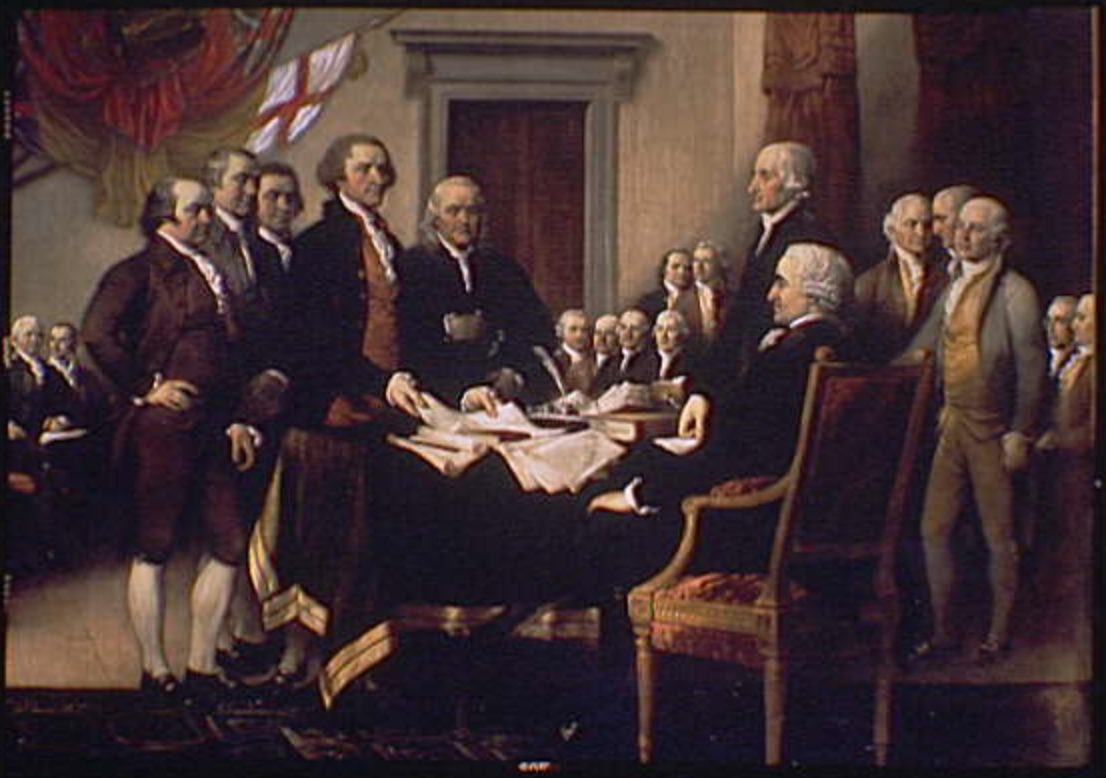
John Trumbull’s “Declaration of Independence, July 4, 1776”

Cicero, a favorite political philosopher of the Founding Fathers, was the first to speak of Natural Law as a moral or political law.  In his books on the Republic and the Laws, he projected the grandeur and promise of a future society based on Natural Law.  The American Founders had a profound appreciation for Cicero because they shared his vision of a commonwealth of prosperity and justice for themselves and their posterity.  In his writings the Founders recognized the necessary ingredients for the model society they hoped to build.  According to Cicero, true law is “right reason.”  Constant and eternal, it is in accordance with nature.  He characterized the universal law this way:

“There will not be one law at Rome and another at Athens, one now and another later; but all nations at all times will be bound by this one eternal and unchangeable law, and the god will be the one common master and general of all people.  He is the author, expounder, and mover of this law; and the person who does not obey it will be in exile from himself.  Insofar as he scorns his nature as a human being, by this very fact he will pay the greatest penalty, even if he escapes all the other things that are generally recognized as punishments . . .”

Belief in the moral truth of Natural Law inspired the Founders and spurred their quest for independence.  In fact, The Declaration is “an act of obedience to a law that persists beyond the English law and beyond any law that the Founders themselves might make, notes Dr. Arynn, President of Hillsdale College.  It is an act of obedience to the ‘Laws of Nature and of Nature’s God,’ and to certain self-evident truths,” primarily the equal and unalienable Rights of all human beings.  To live in ignorance and disregard for the moral principles of Natural Law is to risk exile from life’s ultimate goods like the inestimable blessings of civil and religious liberty.

By Design: Aiming at the Heart of Natural Law

Just government is an ultimate good and the aim of Constitution

Just government is an ultimate good and the aim of the constitutional ordering of separate and arranged powers

Identify target, take aim, fire!  Archery has as its effect the focusing and synchronizing of individual efforts into a common aim at a desired target of highest value.  Even when the mark (bullseye) is missed, the presence of the target produces the likelihood of better outcomes than those that exist in the absence of it.  Aristotle used the archer’s example to illustrate Natural Law.  His Hierarchy of Goods composes the rings of the target, culminating in the ultimate good.  The ordering of goods is as follows:

1.  The good is that at which all things aim

2.  The good is in each thing

3.  The things – and so, the good in each – are arranged in a hierarchy (known as the Creator’s natural order of things)

4.  The ultimate goods – highest ordered – are pursued for their own sake

The founders of America believed just government to be an ultimate good.  This is the aim of the Constitutional ordering of separate and arranged powers.  The Constitution prescribes the optimal arrangement of political power to achieve a government of, by, and for the people.

By Design: Example of Natural Order?

Cicero (c. 106-43 B.C.) The founders favorite expositor of Natural Law

Cicero (c. 106-43 B.C.)
The founders favorite expositor of Natural Law

Natural Law interests me as it relates to the founding of America.  References to it recur frequently in the founding documents of our country, perhaps most notably in the Declaration of Independence as “the Laws of Nature and of Nature’s God.”  Cicero, a favorite political philosopher of the founders, was the first to speak of Natural Law as a moral or political law.  As such, he believed it to be the only reliable basis for good government and just human relations.  Because man shares the gift of reason with his Creator the only rational, common sense approach to governing is through the laws already established by the Creator.  The Creator’s order of things is called Natural Law.

So what then is the natural order of things?  While I can’t efficiently articulate this yet,  I believe I recognized an example of it recently.  During a conversation with Aunt Ginger, who recently lost a grown child, she said that of all the people that she’d loved and lost – husband, parents and friends – the loss of her youngest son was the worst.  “It is just different than the others” she remarked before tearing up.  Confirming what I’ve heard before, the death of a child is the worst loss a human being may experience.  This speaks to the natural order of things.  Regardless of any moral or religious beliefs, it is unnatural for a child to precede his parent in death.  It’s a violation of the Creator’s order of things.