Culture: Small Town Chicks

DSC_0231-2

I had just pulled into Sonic Drive In and ordered when I received a frantic call from my daughter at home. Breathlessly she proceeded to tell me that we had finally hatched 5 chicks in the incubator out in our garage – an experiment my husband and the kids had attempted unsuccessfully until now. The only break in her eyewitness account was to abruptly pause and ask me what to do. Stunned I said I had no idea except that I had heard not to remove the chicks from the incubator until they were completely dry, 4-6 hours after birth. My husband was on call but I told her to send him a text and see if he’d respond with any suggestions. Then I noticed the carhop patiently waiting at my car window with our order. I mouthed an apology and she signaled ‘no worries.’ Then I interrupted my daughter by telling her I’d call her back as soon as I had settled up. Once I was off the phone the carhop proceeded to tell me just what to do because her science class had recently hatched chicks! I laughed and thought to myself . . . only in a small town would a ‘chick’ know about hatching chicks!

TLBCo.'s "War Room" is perfect shelter for new chicks.

TLBCo.’s “War Room” is perfect shelter for new chicks.

A proud footnote: the kids handled the situation beautifully, without my expertise (haha)! When I returned home they were proudly hovering over their chicks, housed in a large square box complete with wood shavings, heat lamp, and food and water – in the appropriate dispensers, no less! – readily on hand in our barn from our initial entry into the chicken business several years ago!!

Personal Note: An Early and Unexpected Mother’s Day Gift

Screen Shot 2014-05-08 at 4.16.57 PMAfter a quick trip through the grocery store for a few items, I did the customary scan for the shortest checkout line. I wound up behind a pregnant mom and her toddler. The toddler was making a concerted effort to get the shopper’s attention at the head of line, who was in the process of writing a check. I began to interact with the boy, never noticing his mom’s frantic search through her backpack. The toddler’s actions were such that it looked as though he was wanting to grab the check in order to pay the bill. So I made the comment: “Hey, Mom, he wants to ‘pick up the tab.'” She offhandedly responded: “he may have to!” Then she looked up at me and embarrassingly confessed about having to go to the car for her wallet. She only had a handful of items so I said I’d buy them for her. She had the most heartfelt reaction and her face said it all. Naturally, she initially resisted then asked for my name and number so she could repay me. She even reached to remove a few greeting cards from her items to lessen the tab but I rebuffed her, commenting she’d only have to return for them before the upcoming holiday. Then she began to cry, noting that she was very emotional not only due to her pregnancy but because this was the first Mother’s Day without her mom. “Well this is my Mother’s Day gift to you”, I said, “in the future, when an opportunity presents itself, ‘pass it on!'”
The gift of giving is as beneficial to the giver as it is to the receiver. It was an early and unexpected gift to myself!

Personal Note: “Harassed” like John Adams!

Screen Shot 2014-04-16 at 12.05.06 PM

Ugh!  I can’t believe it’s been two months since my last post.  So much for my New Year’s resolution of chronicling the daily trials of rebuilding “the original American brand”!   Today I had hoped to capitalize on a rare occasion of uninterrupted time (between the hours of 8 a.m. and 3 p.m., of course, while my kids are at school) – to compose a thoughtful editorial/essay on the anniversary of the Boston Marathon bombing.  If my essay was succinct and insightful then hopefully it would land on the editorial pages of a newspaper or two . . . ok, I’d settle for the local newspaper, The Waco Tribune-Herald; After all, you gotta start somewhere, right?!  (This was the fate of my first attempt – a tribute to Lincoln on President’s Day – something I’d felt compelled to write about for a couple of years . . . so much for efficiency).  Not so fast!  On the way to school, my fourteen year old son had a meltdown and begged to skip school, which is unusual for him.  Mother’s intuition kicked into overdrive.  After dropping the younger two kids at school, I fired off a cautionary email that was met with record response by a respected coach on the other end of my phone line.  A lengthy conversation ensued – with me doing my fair share of the talking – and a game plan was adopted to resolve the simmering crisis.  Having averted the aforementioned teenager crisis, I rushed to complete a few other morning chores like (1) pinning the horses in their stalls so they don’t gorge themselves on the fresh green “spring” grass and “founder” (like last spring), (2) releasing the chickens from their coop so they can “free range”, and (3) feeding Carl, our pet pig, who in actuality is a feral hog that we’ve raised for the last year and a half.  Another topic for another day!

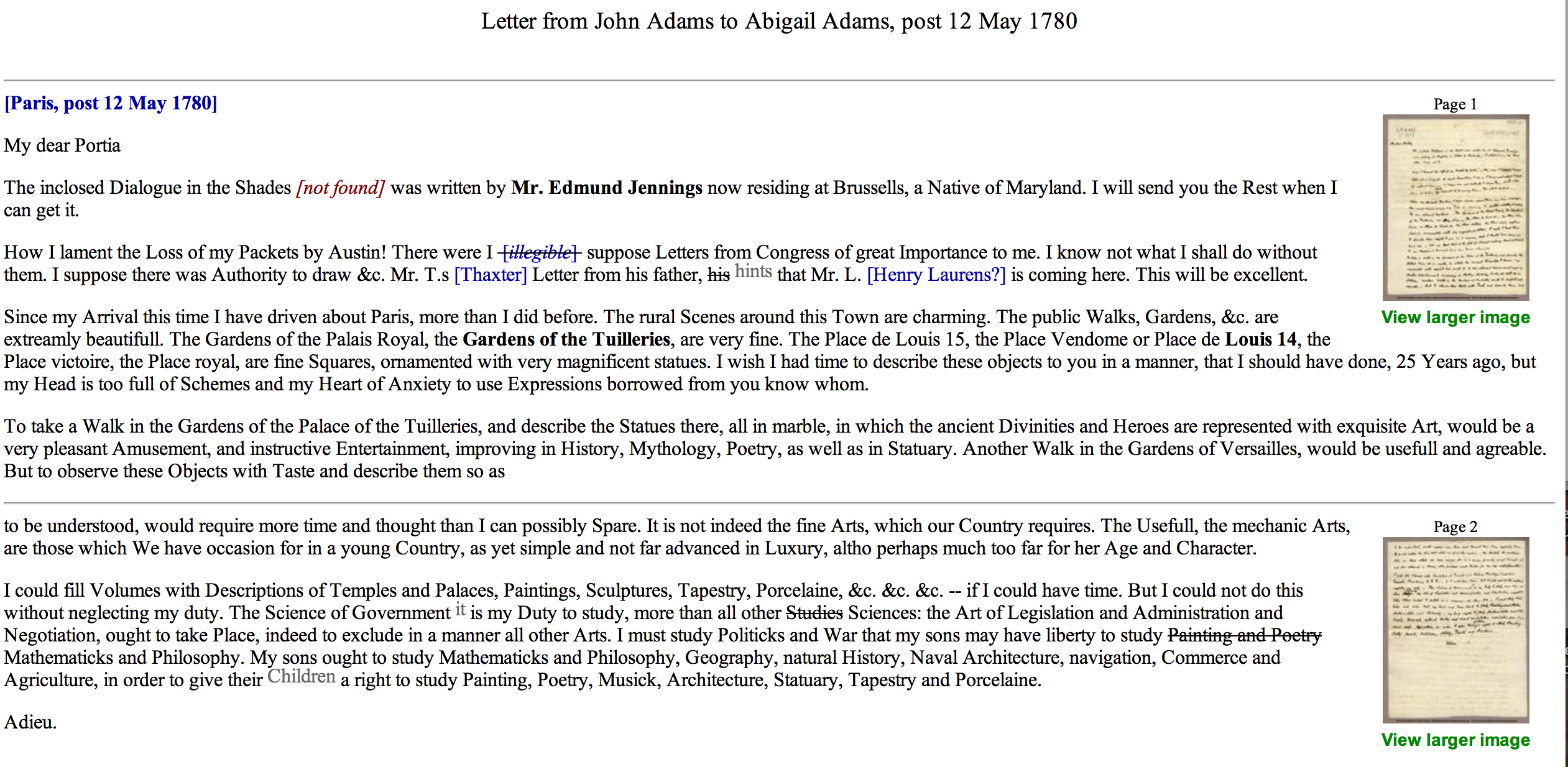
All this reminds me of a letter John Adams penned to his wife Abigail in 1780 while he was our French diplomat.  Adams described his life as “harassed” because he’s terribly busy and had to spend all his time studying ‘government and administration’ so that he could fulfill his duty during the Revolutionary War.  It’s apparent in the letter that Adams felt he had a vital and particular role and that he had to get it right.  His work as a statesman was for something – a higher purpose.  That higher purpose is called “the laws of nature and of natures God” in the Declaration of Independence.  Knowledge of these things, available in the great works of literature and philosophy (and by simply looking around you once you know what to look for), is highly desirable and necessary to securing and maintaining our freedom in America, according to our Founders.  Knowledge of Natural Law is all but absent in America today.  I certainly had no knowledge of it until I began creating The Liberty Brand.

My point is that I, too, feel like I have a particular role to play today in addition to being a mother.  Perhaps because I am a mother.  I don’t presume that I’ll have the impact Adams had, after all, he more than anyone else provoked the writing of the Declaration, recommended Thomas Jefferson author it, and secured France’s alliance in the Revolutionary War.  Tall shoes to fill!  But I love America and I love my children and want nothing more than for both to grow and prosper.  My hope is that The Liberty Brand can successfully capture and showcase the history and meaning of America, thereby making a ‘visual appeal’ for the founding.

The Liberty Brand is a worthy pursuit – the founders would argue, the ultimate pursuit – and I’ll doggedly pursue it . . . all the while being “harassed”!

PRESIDENT’S DAY: “Lincoln Sense – A Penny for Abe’s Thoughts”

Screen Shot 2014-02-09 at 11.38.36 AMDaunted yet compelled to pay a heartfelt tribute to America’s 16th president, the challenge of capturing such sentiments is compounded by the fact that the subject was indisputably one of the most eloquent prose writers of the nineteenth century.  Perhaps his own words can be of assistance.  At this juncture in our political life and at the occasions of President’s day and his recent birthday, let us pause to reflect on Lincoln’s indelible mark on “the hearts of the people for whom he saved the union.”  “It is altogether fitting and proper that we should do this.”

Lincoln used his understanding of the relationship between the Constitution and the Declaration of Independence to successfully confront and resolve the most serious existential crisis faced by America since the Revolution.  In the unpublished “Fragment on the Constitution and the Union”,  Lincoln enlisted one his famous biblical allusions to describe this relationship.  Drawing on the King James translation of Proverbs 25:11 –   “A word fitly spoken is like apples of gold in pictures of silver” –  he likened the Declaration to the “apple of gold” and the Constitution (and the union) to the silver frame or “picture of silver” wrapped around it.  “The picture was made not to conceal, or destroy the apple; but to adorn, and preserve it.  The picture was made for the apple – not the apple for the picture.”  Lincoln understood the Constitution as the embodiment or fulfillment of the principle of liberty to all expressed in the Declaration.

It was the inseparable nature of the Constitution and the Declaration that allowed us to discern that slavery was wrong. To do otherwise, Lincoln argued, would presume that slavery and freedom were moral equivalents.  Therefore, those who stopped short of recognizing the equal, natural rights of every human being were incorrect in their understanding of the American regime.  Chief Justice Taney’s assertion of the right of property in slaves, for example, was flawed in that it considered the Constitution independently of the purpose for which it was designed to serve.

Continuing in “The Fragment”, Lincoln noted, “The assertion of that principle, at that time, was the word, ‘fitly spoken’ which has proved an ‘apple of gold’ to us.”  Lincoln believed that the transcendent principle of liberty to all was the “father of all moral principles” and the “electric cord” that united liberty loving people in every age.  In other words it gave America a cohesion, by melding (hint:  melting pot) a diverse population into one people by a common commitment to a moral principle, hence “e pluribus unum.”  Implicit in this universal truth was the understanding that our rights stem from what we all have in common – our human nature – as opposed to our differences.  Additionally, in his “Speech on the Dred Scott Decision” Lincoln maintained that “The assertion that ‘all men are created equal’ was of no practical use in effecting our separation from Great Britain; and it was placed in the Declaration, nor for that, but for future use.  Its authors meant it to be, thank God, it is now proving itself, a stumbling block to those who in after times might seek to turn a free people back into the hateful paths of despotism.  They knew the proneness of prosperity to breed tyrants, and they meant when such should reappear in this fair land and commence their vocation they should find left for them at least one hard nut to crack.”  Sound familiar?

“Today we are a nation half committed to the American founding and the constitutionalism that flows from it and half committed to progressivism and the modern state,” Hillsdale professor Dr. Portteus notes.  “It is unclear, just as in Lincoln’s own time, whether we will return to our founding principles or take the last steps toward becoming a progressive state and completely rejecting the original ideal for which the revolutionary struggle was made.”  Lincoln asked rhetorically in “A House Divided” speech:  “Have we no tendency to the latter condition?”

Lincoln’s standard of leadership stands in stark contrast to present day politicians, where principles are shaped by public opinion and acted upon only when a voting majority exists.  He faithfully fulfilled his oath to “preserve, protect and defend the Constitution . . .”, adhering to its spirit and intent as opposed to seeking to “fundamentally transform” the nature of the relationship between the government and the governed.  Belief in America’s founding principles necessitated Lincoln’s actions and ironically, he, too, “gave the last full measure of devotion.”  May President Lincoln “not have died in vain.”

Personal Note: What is “Lincoln Sense?”

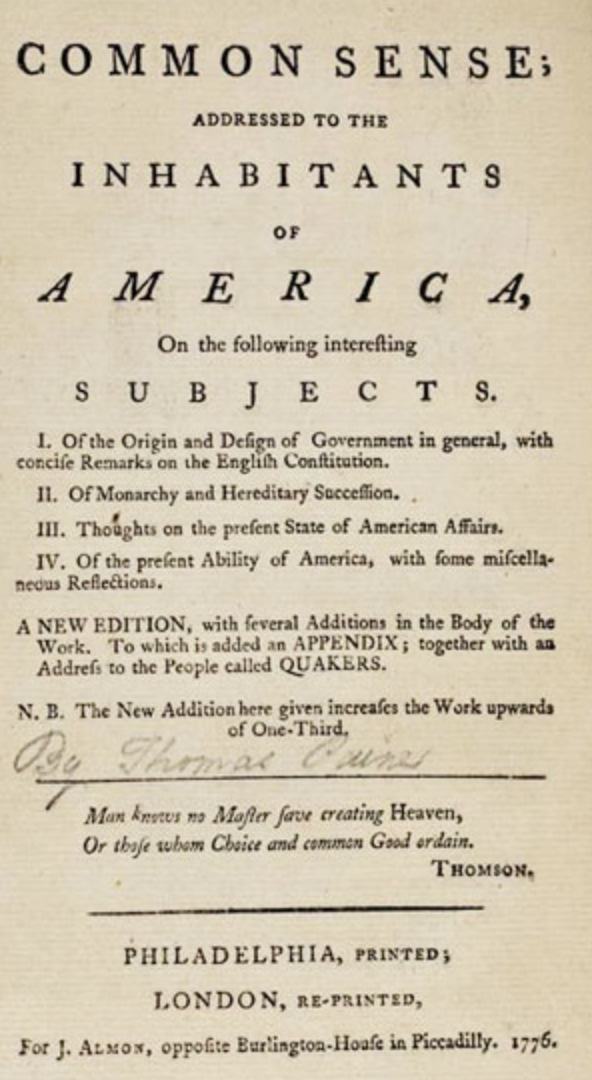
Screen Shot 2014-02-14 at 10.58.42 PMTwo hundred thirty-eight years ago today, a plainspoken pamphlet entitled “Common Sense” by Thomas Paine was a “call-to-arms” for the American Revolution.  It made the case for the necessity of declaring independence from Great Britain.  A mere six months spanned from the publication’s debut until the colonists declared their independence in the summer of 1776, affirming the adage “the pen is mightier than the sword.”  In a nod to this pamphlet I’ve entitled a special President’s Day post:  “Lincoln Sense:  A penny for Abe’s thoughts.”  I pay tribute to our 16th president, largely through his own words (can anyone say it better than he?).  Lincoln eloquently and successfully made the case for returning to the founders’ model of self-government grounded in transcendent moral truth, which guided the nation though its most serious existential crisis since the Revolution.  And he can do it again, if Americans have the common sense to apply “Lincoln Sense.”