 Daunted yet compelled to pay a heartfelt tribute to America’s 16th president, the challenge of capturing such sentiments is compounded by the fact that the subject was indisputably one of the most eloquent prose writers of the nineteenth century. Perhaps his own words can be of assistance. At this juncture in our political life and at the occasions of President’s day and his recent birthday, let us pause to reflect on Lincoln’s indelible mark on “the hearts of the people for whom he saved the union.” “It is altogether fitting and proper that we should do this.”
Lincoln used his understanding of the relationship between the Constitution and the Declaration of Independence to successfully confront and resolve the most serious existential crisis faced by America since the Revolution. In the unpublished “Fragment on the Constitution and the Union”, Lincoln enlisted one his famous biblical allusions to describe this relationship. Drawing on the King James translation of Proverbs 25:11 – “A word fitly spoken is like apples of gold in pictures of silver” – he likened the Declaration to the “apple of gold” and the Constitution (and the union) to the silver frame or “picture of silver” wrapped around it. “The picture was made not to conceal, or destroy the apple; but to adorn, and preserve it. The picture was made for the apple – not the apple for the picture.” Lincoln understood the Constitution as the embodiment or fulfillment of the principle of liberty to all expressed in the Declaration.
It was the inseparable nature of the Constitution and the Declaration that allowed us to discern that slavery was wrong. To do otherwise, Lincoln argued, would presume that slavery and freedom were moral equivalents. Therefore, those who stopped short of recognizing the equal, natural rights of every human being were incorrect in their understanding of the American regime. Chief Justice Taney’s assertion of the right of property in slaves, for example, was flawed in that it considered the Constitution independently of the purpose for which it was designed to serve.
Continuing in “The Fragment”, Lincoln noted, “The assertion of that principle, at that time, was the word, ‘fitly spoken’ which has proved an ‘apple of gold’ to us.” Lincoln believed that the transcendent principle of liberty to all was the “father of all moral principles” and the “electric cord” that united liberty loving people in every age. In other words it gave America a cohesion, by melding (hint: melting pot) a diverse population into one people by a common commitment to a moral principle, hence “e pluribus unum.” Implicit in this universal truth was the understanding that our rights stem from what we all have in common – our human nature – as opposed to our differences. Additionally, in his “Speech on the Dred Scott Decision” Lincoln maintained that “The assertion that ‘all men are created equal’ was of no practical use in effecting our separation from Great Britain; and it was placed in the Declaration, nor for that, but for future use. Its authors meant it to be, thank God, it is now proving itself, a stumbling block to those who in after times might seek to turn a free people back into the hateful paths of despotism. They knew the proneness of prosperity to breed tyrants, and they meant when such should reappear in this fair land and commence their vocation they should find left for them at least one hard nut to crack.” Sound familiar?
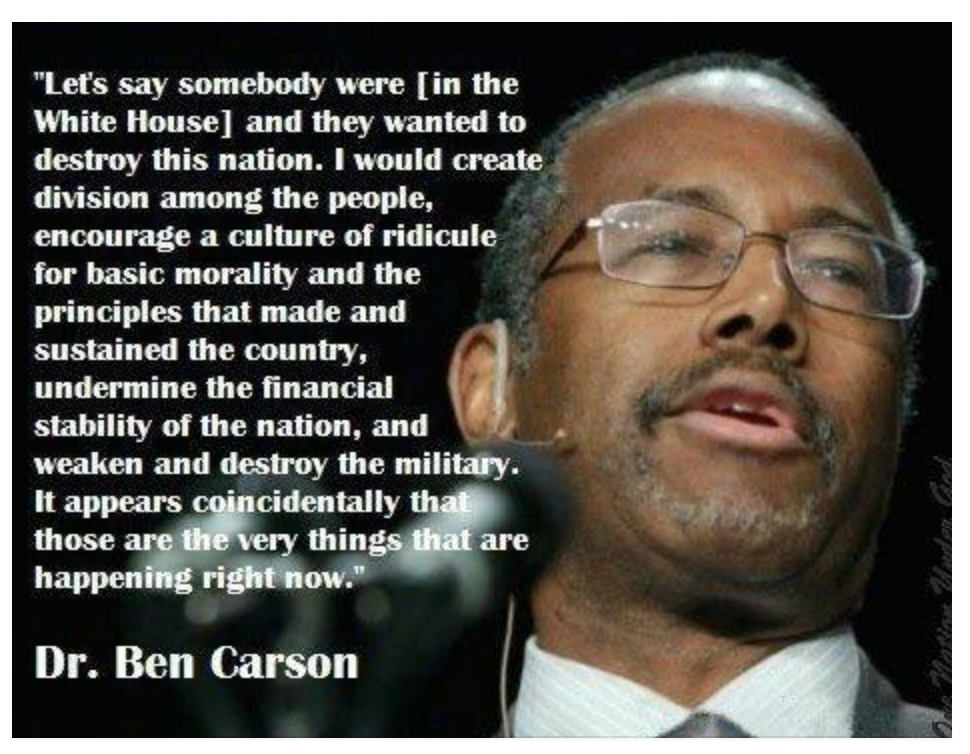
“Today we are a nation half committed to the American founding and the constitutionalism that flows from it and half committed to progressivism and the modern state,” Hillsdale professor Dr. Portteus notes. “It is unclear, just as in Lincoln’s own time, whether we will return to our founding principles or take the last steps toward becoming a progressive state and completely rejecting the original ideal for which the revolutionary struggle was made.” Lincoln asked rhetorically in “A House Divided” speech: “Have we no tendency to the latter condition?”
Lincoln’s standard of leadership stands in stark contrast to present day politicians, where principles are shaped by public opinion and acted upon only when a voting majority exists. He faithfully fulfilled his oath to “preserve, protect and defend the Constitution . . .”, adhering to its spirit and intent as opposed to seeking to “fundamentally transform” the nature of the relationship between the government and the governed. Belief in America’s founding principles necessitated Lincoln’s actions and ironically, he, too, “gave the last full measure of devotion.” May President Lincoln “not have died in vain.”






 The Liberty Belle Blog